

A gut health specialist, first.
About Me
I help women feel well and get the most out of their GLP-1 medication, not just tolerate it, judgement-free and supported.
Starting a GLP-1 medication can feel like the start of something hopeful, often the first time in years that weight loss feels possible after “having tried everything else”. But alongside that hope comes a new set of questions nobody quite prepared you for."Why do I feel so nauseous?"
"What should I actually be eating?" "How do I stop feeling constipated?" "Am I eating enough protein?" "Will I lose muscle?" "
What happens when I stop the medication?"
These are conversations I have every day. GLP-1 medications are changing how we treat obesity, but the nutrition and lifestyle side of the treatment is something most women are left to work out alone. That's where I come in, and it's not new territory for me having supported women with gut health issues.
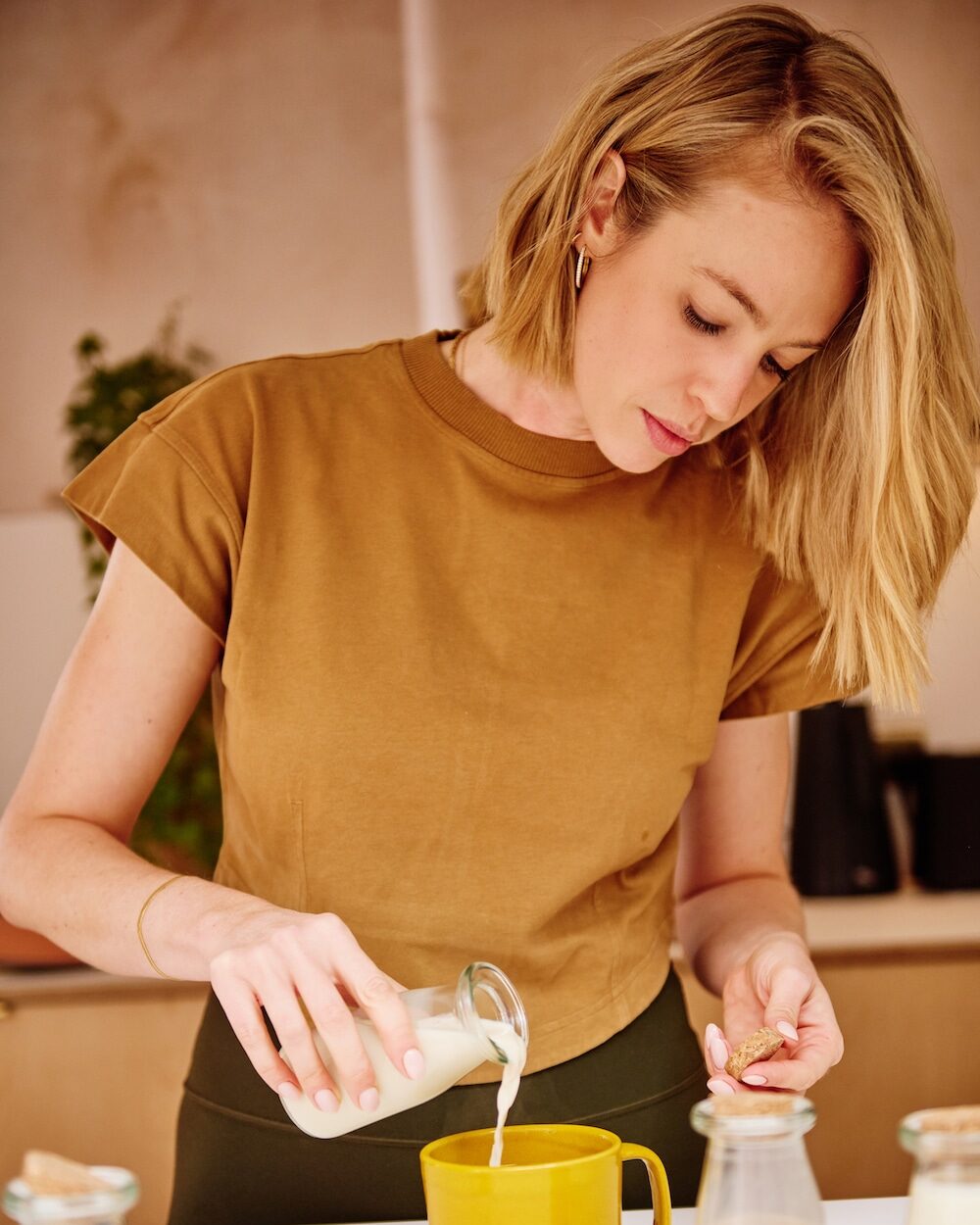
My route here wasn't a straight line.
I studied Neuroscience before qualifying as a Registered Dietitian, drawn in by how much the brain impacts our gut, appetite and behaviours. After qualifying as a Registered Dietitian, I spent several years in the food and beverage industry across the UK and Asia. After returning to clinical practice, I kept being drawn to the same kind of client: women with complicated digestive symptoms. Women who'd been told they had IBS and left to manage it alone. Women dealing with bloating, constipation or nausea that nobody had properly investigated. Women juggling careers and families who'd stopped expecting their gut to ever feel calm again. That's the work that shaped me. Gut health, women's health, and the gut-brain connection became my specialism.
INTEGRATIVE WEIGHT SUPPORT
How did GLP-1s come into the picture?
The reality is that most women will start taking Mounjaro®, Wegovy® or Ozempic® with no nutritional support and recently I had noticed a number of patients requesting help to manage their symptoms, their weight loss plateaus or support to come off of the GLP-1s. Without any support, these patients were suffering with debilitating symptoms, weight loss stagnation and anxiety about life after the medication. All of which can be supported with nutritional advice and support. Some had sourced their prescription online with almost no ongoing support behind it. Others had been handed a leaflet and left to figure out the rest. Plenty had turned to social media, where the advice was confusing at best and dangerous at worst. I didn't start with GLP-1s. I started with the gut and behaviour change, and that's the key to this problem. Women on these medications don't just need someone to manage the side effects. They need the same whole-picture gut health approach I'd already been building for years, applied to this specific situation.
Explore Our GLP-1 Support
Sustainable Nutrition
Weight loss shouldn't come at the cost of your health.
GLP-1 medications reduce appetite, which is exactly why they work, and exactly why eating less also raises your risk of inadequate protein, constipation, nausea, low fibre intake, malnutrition, muscle loss, and food anxiety. Our job isn't to help you eat as little as possible. It's to help you eat well enough that your body stays healthy while the medication does its job and take advantage of this opportunity to build sustainable long-term habits. You don't have to suffer to get the results you're working toward, and success was never just the number on the scale. It's how you feel, how strong you are, how much energy you have, and whether you can hold onto your results long after treatment ends.


TRUSTED PROFESSIONAL
My Qualifications
• HCPC Registered Dietitian
• Member of the British Dietetic Association (BDA)
• PGDip Dietetics
• MSc Nutrition
• BSc (Hons) Neuroscience
• Graduate Certificate in Clinical Hypnosis
• British Menopause Society trained
• Extensive training in gut health and functional gastrointestinal disorders
• Additional training in women’s health, including PCOS/PMOS and endometriosis

Beyond the qualifications
